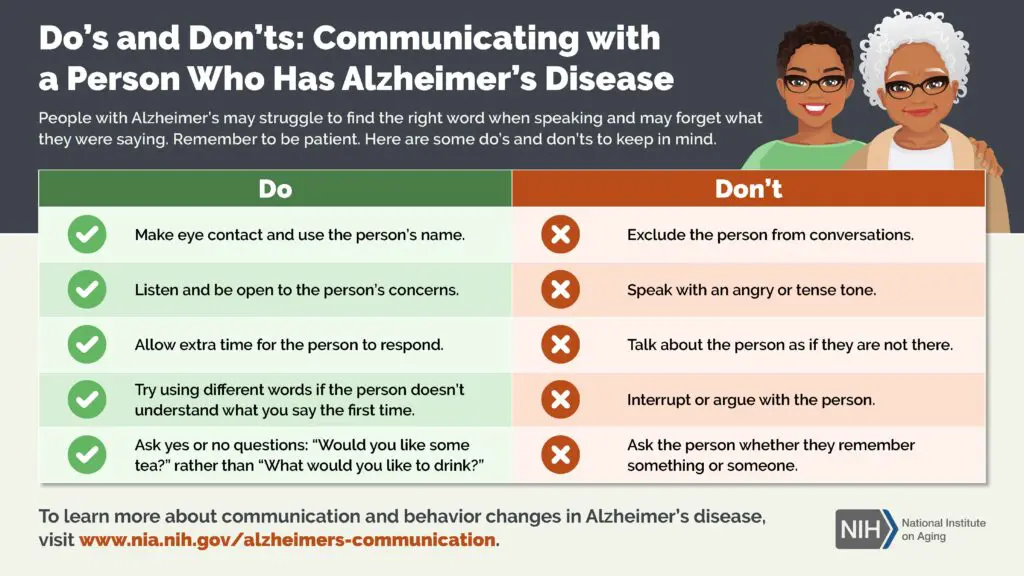
When a loved one is living with Alzheimer’s disease or other dementias, one of the biggest challenges families can face is communication. As the disease progresses, conversations can shift in surprising and sometimes frustrating ways. But with patience and understanding, communication can still be one of the most meaningful ways to stay connected.
How Communication Changes Over Time
- Early Stages: A person may struggle to find the right word, lose track of a conversation, or repeat themselves.
- Middle Stages: Understanding and responding may take longer. The person may use fewer words, rely more on gestures, or get confused by complex instructions.
- Later Stages: Verbal communication may become very limited, but tone, touch, and other nonverbal forms of connection remain powerful.
What to Focus On as Abilities Change
Even as communication shifts, there are meaningful ways to connect at every stage:
- Early Stages
- Focus on listening with patience, even if stories repeat.
- Encourage independence in conversation—let them share as much as they can.
- Use reminders, notes, or visual cues to support conversations.
- Middle Stages
- Focus on simplicity—short phrases, yes-or-no questions, and step-by-step directions.
- Pay attention to nonverbal cues like gestures or expressions.
- Share activities that don’t rely heavily on words, like looking through photos or folding laundry together.
- Later Stages
- Focus on connection through presence rather than words.
- Use touch, music, or familiar routines to bring comfort.
- Pay attention to tone of voice and facial expressions, which can often speak louder than words.
Finding Support Along the Way
At St. Paul Elder Services (SPES), we know how overwhelming these changes can feel. That’s why we offer programs designed to support caregivers and families:
- Support Groups – A safe space to share experiences and encouragement.
- Book Club – Learning together through resources that spark new approaches.
- 1:1 Consultations – Personalized guidance for communication strategies, care planning, or difficult transitions.
- Education Programs – Practical workshops that equip families with tools to connect in each stage of the disease.
Connection Beyond Words
Even as words fade, connection does not. A smile, gentle touch, or listening to a favorite song can bring comfort and joy. By focusing less on what is said and more on being present together, families can continue to nurture meaningful relationships throughout the Alzheimer’s journey.